Loading
cristalline
Le meilleur choix pour les aquariums marins et récifaux
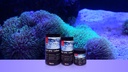
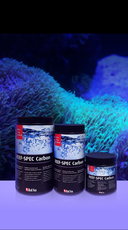
REEF-SPEC Carbon est disponible en quatre formats : 100g, 250g, 500g et 1 000g. La taille optimisée de ses granulés, associée à une structure micro et macro poreuse, lui confère une capacité d’adsorption totale exceptionnellement élevée et permet d’éliminer rapidement les polluants organiques spécifiques présents dans les aquariums récifaux.
REEF-SPEC Carbon se caractérise par un relargage extrêmement faible de Phosphates et une teneur minimale en cendres, tout en maintenant un pH stable sans affecter la composition chimique de l’eau de l’aquarium.
Le charbon REEF-SPEC nécessite un remplacement moins fréquent que les charbons non spécifiques aux récifs ou de qualité inférieure, ce qui en fait une solution très efficace et rentable pour maintenir une qualité d’eau optimale dans les aquariums marins et récifaux.
Caractéristiques et
données principales
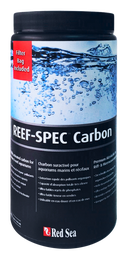
Flocons de 0,6 à 2,3mm
Forme
1,48g/ml
Densité
1,04ml/g
Volume de pores
1000m²/g
Surface totale
990m²/ml
TSA/PV
1000mg/g
Adsorbtion des petites molécules organiques
280mg/g
Adsorbtion des grandes molécules organiques
>8
pH en eau distillée
0.000001 g/ml
Rejet de Phosphates
Élimination rapide des polluants organiques
Capacité d’adsorption totale élevée
Rejet de Phosphates ultra faible
Teneur en cendres ultra faible
Adapté aux aquariums d’eau douce et d’eau de mer
Sac de filtration inclus (250g, 500g, 1 000g)

Caractéristiques
Données principales
Flocons de 0,6 à 2,3mm
Forme
1,48g/ml
Densité
1,04ml/g
Volume de pores
1000m²/g
Surface totale
990m²/ml
TSA/PV
1000mg/g
Adsorbtion des petites molécules organiques
280mg/g
Adsorbtion des grandes molécules organiques
>8
pH en eau distillée
0.000001 g/ml
Rejet de Phosphates
Élimination rapide des polluants organiques
Capacité d’adsorption totale élevée
Rejet de Phosphates ultra faible
Teneur en cendres ultra faible
Adapté aux aquariums d’eau douce et d’eau de mer
Sac de filtration inclus (250g, 500g, 1 000g)
Instructions d’utilisation et de dosage
Guide d’utilisation
Astuces d’utilisation
Élimination des charges organiques et de la coloration de l’eau :
La dose recommandée de REEF-SPEC Carbon de Red Sea est d’environ 50g (100 ml) pour 200 L (50 gallons) pendant une période de 1 à 2 mois pour un aquarium récifal modérément peuplé.
Traitement post-médicamenteux :
La dose recommandée de REEF-SPEC Carbon de Red Sea pour adsorber les résidus de médicaments est d’environ 100g (200 ml) pour 200 L (50 gallons) pendant une semaine.
Traitement après ozone :
La dose recommandée de charbon REEF-SPEC Carbon de Red Sea pour éliminer l’ozone résiduel est de 50g pour 50 mg/h d’injection d’ozone. Le charbon doit être placé à la sortie du réacteur à ozone/écumeur de protéines. Le charbon doit être remplacé lorsqu’il a atteint environ 50 % de son volume d’origine.
L’activité d’adsorption du média carbone repose sur un bon contact entre le carbone et l’eau. Par conséquent, un débit d’eau modéré augmentera l’efficacité. Un débit d’eau élevé réduira le temps de contact et perturbera le processus d’adhérence des molécules organiques au carbone. Un débit d’eau élevé peut également provoquer le frottement des granulés les uns contre les autres, libérant ainsi du carbone dans l’eau.
Pour obtenir les meilleurs résultats :
- Éliminez les particules fines en rinçant le charbon sous l’eau du robinet.
- En raison de l’air emprisonné dans les pores, le charbon flottera. Il est donc recommandé de le tremper dans de l’eau osmosée jusqu’à ce que tout l’air soit libéré.
- Placez le charbon dans un endroit où le débit est compris entre 1 000 et 1 500 L/h (250 à 400 g/h) pour 50g de charbon.
- Remplacez le charbon tous les 1,5 à 2 mois. Remarque : lorsque le charbon est saturé en matières organiques, il peut commencer à adsorber certains oligo-éléments présents dans l’eau de mer.

Pourquoi utiliser du charbon
dans un aquarium récifal ?
Comment le charbon
actif purifie-t-il l’eau ?
Qu’est-ce que le
charbon suractivé ?
Quel charbon
est idéal ?
Pourquoi utiliser du charbon dans un aquarium récifal ?
Les aquariums récifaux sont des écosystèmes fermés dans lesquels les organismes produisent des déchets organiques : protéines, graisses, glucides, acides et phénols. Si elles restent dans l’eau, ces matières organiques alimentent les micro-organismes indésirables, augmentent la demande en oxygène, réduisent le potentiel redox, augmentent les niveaux de CO₂, réduisent le pH et favorisent la prolifération de bactéries et d’algues nuisibles. Elles nuisent également à la pénétration de la lumière, essentielle à la croissance des coraux. Un écumage puissant des protéines, une filtration mécanique fine et une filtration biologique saine permettent de traiter les grosses particules, mais de nombreux petits composés organiques ne peuvent être éliminés efficacement qu’à l’aide de charbon actif.
Comment le charbon actif purifie-t-il l’eau ?
D’un point de vue scientifique, le charbon élimine les composés organiques de l’eau grâce à un processus physique appelé adsorption. Dans un aquarium récifal, les pores submicroscopiques du charbon actif constituent la dernière étape de la filtration mécanique, adsorbant les molécules organiques trop petites pour être capturées par les médias filtrants les plus fins ou éliminées physiquement par l’écumage des protéines. L’adsorption peut être décrite comme l’adhérence de molécules à une surface par des forces d’attraction. Dans le charbon actif, ce phénomène se produit à l’intérieur de son vaste réseau de pores submicroscopiques, où les forces d’attraction entre les molécules organiques et les surfaces internes du charbon sont plus fortes que les forces qui maintiennent ces molécules dissoutes dans l’eau. Ce processus se poursuit jusqu’à ce que la surface disponible soit entièrement occupée et que le charbon soit saturé en matières organiques.
Qu’est-ce que le charbon suractivé ?
Le charbon actif est un matériau extrêmement poreux, doté d’une structure spongieuse et d’une surface interne très importante par rapport à sa taille physique. Il est produit à partir de divers matériaux organiques à forte teneur en carbone, tels que les coques de noix de coco, le lignite, le charbon bitumineux ou l’anthracite. Le matériau à base de carbone est « activé » par modification physique et décomposition thermique dans un four, dans une atmosphère et à une température soigneusement contrôlées. Le processus d’activation augmente considérablement la surface par unité de volume en créant un fin réseau de pores submicroscopiques, ce qui confère au charbon actif sa capacité à fonctionner comme un matériau filtrant efficace. Le matériau de base et le processus d’activation déterminent les caractéristiques physiques du produit fini. Il existe de nombreuses qualités différentes de charbon actif, chacune étant conçue pour des applications et des exigences de performance spécifiques.
Quel charbon est idéal ?
Il existe plusieurs tests internationalement reconnus pour évaluer et comparer le charbon actif. Cependant, les paramètres les plus importants pour choisir un charbon pour les aquariums récifaux sont l’indice d’iode et l’indice de bleu de méthylène. Ces deux paramètres mesurent la capacité du charbon à adsorber les déchets organiques d’un aquarium récifal qui ne sont pas éliminés par filtration mécanique ou écumage des protéines. Plus le nombre est élevé, plus la quantité de matières organiques éliminées par gramme de charbon actif utilisé sera importante. Ces deux nombres sont tout aussi importants l’un que l’autre et doivent toujours être pris en compte ensemble lors de l’évaluation des données de test. Certains fabricants indiquent un indice de mélasse ; cependant, les molécules de la taille de la mélasse sont généralement éliminées par écumage des protéines, ce qui rend cet indice inutile pour évaluer l’adéquation du charbon actif pour les aquariums récifaux. Dans le passé, les carbones étaient connus pour libérer du phosphate dans l’eau, ce qui n’est pas souhaitable pour un aquarium récifal. C’est pourquoi des niveaux plus faibles de phosphate lixiviable sont préférables. En réalité, tant que le phosphate lixiviable reste en dessous d’un seuil de base, les différences en dessous de ce niveau ne sont pas mesurables dans les aquariums récifaux et sont sans importance. La propreté ou la poussiéreuse du produit est également un facteur à prendre en considération et est mesurée par le niveau de cendres. Plus le niveau de cendres est bas, mieux c’est, car un niveau élevé indique que davantage de particules sont libérées dans l’eau et qu’il reste moins de charbon actif pour effectuer la filtration. Les niveaux de cendres sont souvent indiqués par les fabricants, mais le moyen le plus simple de les visualiser est d’observer la turbidité lorsque le charbon est ajouté à l’eau. Outre ces indicateurs importants, l’efficacité globale du charbon actif sera influencée par ses paramètres physiques, tels que la densité du produit, la surface totale spécifique (TSA), le volume poreux et la taille des mailles.
Termes techniques
Indice d’Iode
Test standard effectué pour estimer la capacité d’adsorption des petites molécules, dans une plage comprise entre 10 Å et 15 Å. Les niveaux recommandés pour les aquariums récifaux sont supérieurs à 850 mg/g, mais plus le chiffre est élevé, mieux c’est.
Indice de Bleu de méthylène
Test standard effectué pour estimer la capacité d’adsorption des molécules de taille moyenne comprises entre 15 Å et 40 Å. Les niveaux recommandés pour les aquariums récifaux sont supérieurs à 250 mg/g, mais plus le chiffre est élevé, mieux c’est.
Indice de mollasse
Test non standard réalisé pour estimer la capacité d’adsorption des grosses molécules supérieures à 40 Å. Il n’existe pas de niveau recommandé pour les aquariums récifaux ; ces molécules sont éliminées par écumage des protéines.
Phosphates relargables
Mesure de la quantité d’orthophosphates résiduels PO4 pouvant s’échapper du charbon vers l’aquarium. Moins il y a de phosphate, mieux c’est. Pour les aquariums récifaux, cette quantité doit être inférieure à 10 mg/kg. Les charbons de la plus haute qualité auront une teneur inférieure à 2 mg/kg.
Niveau de cendres
Mesure de la teneur en éléments non carbonés du charbon actif. Il s’agit généralement de poussières qui se libèrent du charbon dans l’eau. Moins il y a de cendres, mieux c’est.
Densité du produit
Densité du charbon à l’efficacité d’empilement maximale, exprimée en g/ml.
TSA – Surface totale
Surface poreuse disponible pour l’adsorption pour une masse donnée de charbon, mesurée à l’aide de techniques telles que l’adsorption d’azote BET ; exprimée en m²/g. Les niveaux recommandés sont supérieurs à 800 m²/g.
Volume des pores
La quantité de pores macro, méso et micro. Le rapport entre la TSA et le volume des pores permet d’estimer la surface active en m²/ml.
Taille des mailles
Mesure de la taille des particules du produit granulaire. La taille de maille recommandée pour le traitement de l’eau est de 8 x 30 mesh (0,6 x 2,4 mm).

Pourquoi utiliser du charbon
dans un aquarium récifal ?
Comment le charbon
actif purifie-t-il l’eau ?
Qu’est-ce que le
charbon suractivé ?
Quel charbon
est idéal ?
Pourquoi utiliser du charbon dans un aquarium récifal ?
Les aquariums récifaux sont des écosystèmes fermés dans lesquels les organismes produisent des déchets organiques : protéines, graisses, glucides, acides et phénols. Si elles restent dans l’eau, ces matières organiques alimentent les micro-organismes indésirables, augmentent la demande en oxygène, réduisent le potentiel redox, augmentent les niveaux de CO₂, réduisent le pH et favorisent la prolifération de bactéries et d’algues nuisibles. Elles nuisent également à la pénétration de la lumière, essentielle à la croissance des coraux. Un écumage puissant des protéines, une filtration mécanique fine et une filtration biologique saine permettent de traiter les grosses particules, mais de nombreux petits composés organiques ne peuvent être éliminés efficacement qu’à l’aide de charbon actif.
Comment le charbon actif purifie-t-il l’eau ?
D’un point de vue scientifique, le charbon élimine les composés organiques de l’eau grâce à un processus physique appelé adsorption. Dans un aquarium récifal, les pores submicroscopiques du charbon actif constituent la dernière étape de la filtration mécanique, adsorbant les molécules organiques trop petites pour être capturées par les médias filtrants les plus fins ou éliminées physiquement par l’écumage des protéines. L’adsorption peut être décrite comme l’adhérence de molécules à une surface par des forces d’attraction. Dans le charbon actif, ce phénomène se produit à l’intérieur de son vaste réseau de pores submicroscopiques, où les forces d’attraction entre les molécules organiques et les surfaces internes du charbon sont plus fortes que les forces qui maintiennent ces molécules dissoutes dans l’eau. Ce processus se poursuit jusqu’à ce que la surface disponible soit entièrement occupée et que le charbon soit saturé en matières organiques.
Qu’est-ce que le charbon suractivé ?
Le charbon actif est un matériau extrêmement poreux, doté d’une structure spongieuse et d’une surface interne très importante par rapport à sa taille physique. Il est produit à partir de divers matériaux organiques à forte teneur en carbone, tels que les coques de noix de coco, le lignite, le charbon bitumineux ou l’anthracite. Le matériau à base de carbone est « activé » par modification physique et décomposition thermique dans un four, dans une atmosphère et à une température soigneusement contrôlées. Le processus d’activation augmente considérablement la surface par unité de volume en créant un fin réseau de pores submicroscopiques, ce qui confère au charbon actif sa capacité à fonctionner comme un matériau filtrant efficace. Le matériau de base et le processus d’activation déterminent les caractéristiques physiques du produit fini. Il existe de nombreuses qualités différentes de charbon actif, chacune étant conçue pour des applications et des exigences de performance spécifiques.
Quel charbon est idéal ?
Il existe plusieurs tests internationalement reconnus pour évaluer et comparer le charbon actif. Cependant, les paramètres les plus importants pour choisir un charbon pour les aquariums récifaux sont l’indice d’iode et l’indice de bleu de méthylène. Ces deux paramètres mesurent la capacité du charbon à adsorber les déchets organiques d’un aquarium récifal qui ne sont pas éliminés par filtration mécanique ou écumage des protéines. Plus le nombre est élevé, plus la quantité de matières organiques éliminées par gramme de charbon actif utilisé sera importante. Ces deux nombres sont tout aussi importants l’un que l’autre et doivent toujours être pris en compte ensemble lors de l’évaluation des données de test. Certains fabricants indiquent un indice de mélasse ; cependant, les molécules de la taille de la mélasse sont généralement éliminées par écumage des protéines, ce qui rend cet indice inutile pour évaluer l’adéquation du charbon actif pour les aquariums récifaux. Dans le passé, les carbones étaient connus pour libérer du phosphate dans l’eau, ce qui n’est pas souhaitable pour un aquarium récifal. C’est pourquoi des niveaux plus faibles de phosphate lixiviable sont préférables. En réalité, tant que le phosphate lixiviable reste en dessous d’un seuil de base, les différences en dessous de ce niveau ne sont pas mesurables dans les aquariums récifaux et sont sans importance. La propreté ou la poussiéreuse du produit est également un facteur à prendre en considération et est mesurée par le niveau de cendres. Plus le niveau de cendres est bas, mieux c’est, car un niveau élevé indique que davantage de particules sont libérées dans l’eau et qu’il reste moins de charbon actif pour effectuer la filtration. Les niveaux de cendres sont souvent indiqués par les fabricants, mais le moyen le plus simple de les visualiser est d’observer la turbidité lorsque le charbon est ajouté à l’eau. Outre ces indicateurs importants, l’efficacité globale du charbon actif sera influencée par ses paramètres physiques, tels que la densité du produit, la surface totale spécifique (TSA), le volume poreux et la taille des mailles.
Termes techniques
Indice d’Iode
Test standard effectué pour estimer la capacité d’adsorption des petites molécules, dans une plage comprise entre 10 Å et 15 Å. Les niveaux recommandés pour les aquariums récifaux sont supérieurs à 850 mg/g, mais plus le chiffre est élevé, mieux c’est.
Indice de Bleu de méthylène
Test standard effectué pour estimer la capacité d’adsorption des molécules de taille moyenne comprises entre 15 Å et 40 Å. Les niveaux recommandés pour les aquariums récifaux sont supérieurs à 250 mg/g, mais plus le chiffre est élevé, mieux c’est.
Indice de mollasse
Test non standard réalisé pour estimer la capacité d’adsorption des grosses molécules supérieures à 40 Å. Il n’existe pas de niveau recommandé pour les aquariums récifaux ; ces molécules sont éliminées par écumage des protéines.
Phosphates relargables
Mesure de la quantité d’orthophosphates résiduels PO4 pouvant s’échapper du charbon vers l’aquarium. Moins il y a de phosphate, mieux c’est. Pour les aquariums récifaux, cette quantité doit être inférieure à 10 mg/kg. Les charbons de la plus haute qualité auront une teneur inférieure à 2 mg/kg.
Niveau de cendres
Mesure de la teneur en éléments non carbonés du charbon actif. Il s’agit généralement de poussières qui se libèrent du charbon dans l’eau. Moins il y a de cendres, mieux c’est.
Densité du produit
Densité du charbon à l’efficacité d’empilement maximale, exprimée en g/ml.
TSA – Surface totale
Surface poreuse disponible pour l’adsorption pour une masse donnée de charbon, mesurée à l’aide de techniques telles que l’adsorption d’azote BET ; exprimée en m²/g. Les niveaux recommandés sont supérieurs à 800 m²/g.
Volume des pores
La quantité de pores macro, méso et micro. Le rapport entre la TSA et le volume des pores permet d’estimer la surface active en m²/ml.
Taille des mailles
Mesure de la taille des particules du produit granulaire. La taille de maille recommandée pour le traitement de l’eau est de 8 x 30 mesh (0,6 x 2,4 mm).
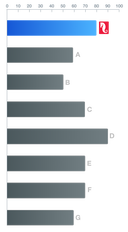
Comparaison des performances du charbon REEF-SPEC
Résultats des tests comparatifs entre le REEF-SPEC Carbon de Red Sea et d’autres marques leaders
Evaluation globale

A
B
C
D
E
F
G
*L’évaluation globale est basée sur la moyenne des 4 paramètres suivants.
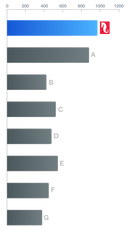
Indice d’Iode
mg/g
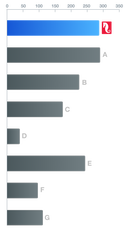
Indice du Bleu de
méthylène mg/g
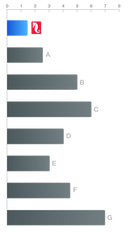
Phosphates
relargables mg/g
Evaluation de
la propreté
Indice d’Iode mg/g
A
B
C
D
E
F
G
Indice du Bleu de méthylène mg/g
A
B
C
D
E
F
G
Phosphates relargables mg/g
A
B
C
D
E
F
G
Evaluation de la propreté
A
B
C
D
E
F
G
Note : les tests ont été réalisés dans le laboratoire de Red Sea sur des échantillons uniques de plusieurs grandes marques de charbon, achetés au hasard.
Comparaison des performances du charbon REEF-SPEC
Résultats des tests comparatifs entre le REEF-SPEC Carbon de Red Sea et d’autres marques leaders
Evaluation globale
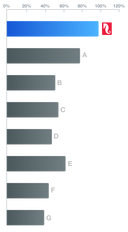
*L’évaluation globale est basée sur la moyenne des 4 paramètres suivants.
Indice d’Iode
mg/g
Indice du Bleu de
méthylène mg/g
Phosphates
relargables mg/g
Evaluation de
la propreté
Indice d’Iode mg/g
Indice du Bleu de méthylène mg/g
Phosphates relargables mg/g
Evaluation de la propreté
Note : les tests ont été réalisés dans le laboratoire de Red Sea sur des échantillons uniques de plusieurs grandes marques de charbon, achetés au hasard.
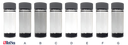
Comparaison des performances
REEF-SPEC Carbon par rapport aux grandes marques : résultats en matière de performances de propreté
Rejoignez notre groupe Facebook
La plus grande et la plus dynamique communauté d’utilisateurs Red Sea partageant des conseils, des expériences et des connaissances.
Allons-y !
Rejoignez notre groupe Facebook
La plus grande et la plus dynamique communauté d’utilisateurs Red Sea partageant des conseils, des expériences et des connaissances.
Allons-y !
Où l’acheter
REEF-SPEC Carbon est disponible dans les magasins suivants près de chez vous :
Trouver le Revendeur le plus proche
Où l’acheter
REEF-SPEC Carbon est disponible dans les magasins suivants près de chez vous :
Trouver le Revendeur le plus proche